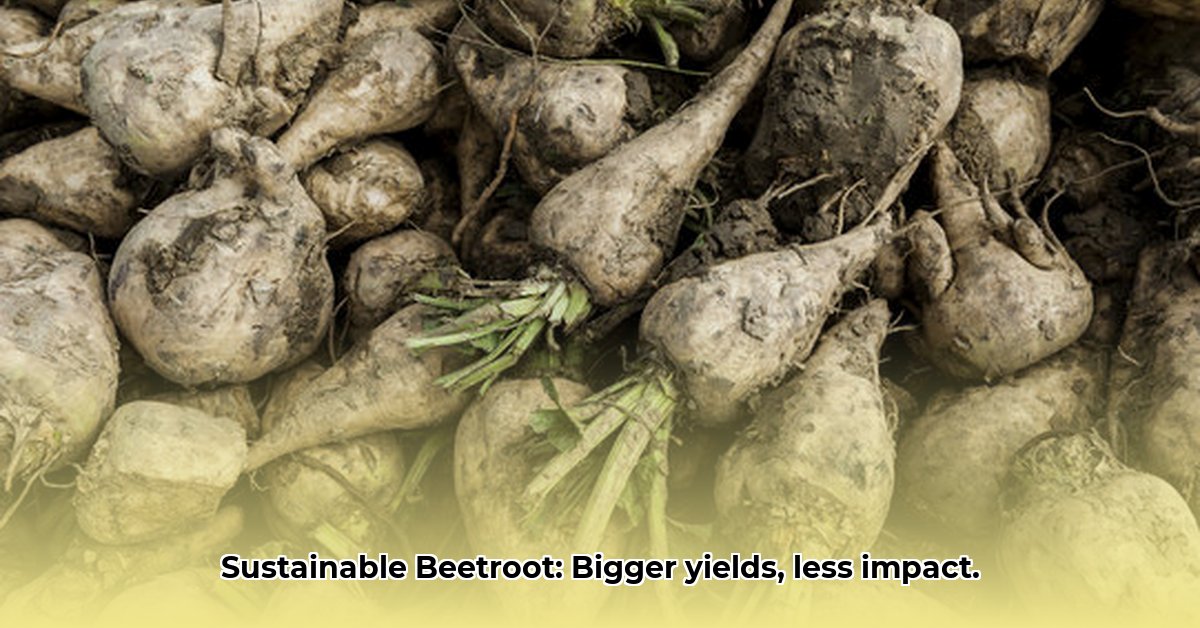
Beetwortel: Growing a Greener Crop
Growing beetwortel (sugar beet) in South Africa is a lucrative business, but responsible farming demands environmental consciousness. High water consumption and heavy fertiliser reliance are significant concerns. Fortunately, sustainable practices can boost yields while protecting our environment. This guide outlines actionable steps for a greener beetwortel operation. For more on sustainable farming techniques, check out this helpful resource.
Making Beetwortel Water-Wise
Water is a precious resource, and beetwortel is a thirsty crop. Fortunately, targeted irrigation techniques can significantly improve water use efficiency (WUE). Precision irrigation – delivering water directly to the roots – is far more effective than flood irrigation.
Step-by-Step to Smarter Watering:
Assess Your Soil: Soil type dictates watering frequency and depth. Sandy soil drains rapidly, requiring more frequent, lighter watering, while clay soil retains water, needing less frequent, deeper watering.
Embrace Drip Irrigation: A drip irrigation system delivers water directly to the roots, reducing evaporation and runoff. Timers automate watering based on soil moisture levels.
Monitor Soil Moisture: Regularly check soil moisture using a soil moisture meter. Overwatering leads to root rot, just as underwatering impacts yield.
Actionable Recommendation: Invest in a soil moisture meter and explore drip irrigation options to optimise water usage.
Is it worth the initial investment in a drip irrigation system? Absolutely, considering the long-term water savings and improved yields. A recent study showed a 25% increase in WUE using drip irrigation compared to traditional methods.
Fertilising Beetwortel Smartly
Over-reliance on chemical fertilisers harms the environment. Sustainable fertiliser management aims to supply essential nutrients without excessive runoff.
Three Approaches to Fertiliser Management:
Soil Testing: Before applying fertilisers, conduct a soil test to determine nutrient levels. This prevents adding unnecessary chemicals and reduces environmental impact.
Explore Organic Options: Compost and cover crops improve soil health naturally, increasing nutrient availability and reducing the need for synthetic fertilisers.
Precision Application: Use GPS-guided spreaders for precise fertiliser application, directly to the root zone, minimising waste and runoff.
Actionable Recommendation: Conduct regular soil tests and explore organic fertilising options to reduce synthetic fertiliser use. This not only benefits the environment but can also lead to cost savings in the long run. Did you know that organic fertilisers can improve soil structure, enhancing water retention and nutrient uptake?
Pest Control – The Balanced Approach
Integrated Pest Management (IPM) offers a sustainable alternative to harsh chemical pesticides.
IPM Steps for Beetwortel:
Regular Monitoring: Regularly inspect plants for pest signs. Early detection allows for prompt, targeted intervention.
Prioritise Natural Solutions: Employ biological control (beneficial insects) and crop rotation before resorting to chemical pesticides.
Chemical Pesticides as a Last Resort: Use chemical pesticides sparingly, only when necessary, and strictly follow instructions.
Actionable Recommendation: Implement a robust IPM plan, prioritizing natural pest control methods and using chemical pesticides only as a last resort. Remember, a healthy ecosystem supports a healthy crop. Professor Janina van der Merwe, Head of Entomology at Stellenbosch University, emphasises the importance of biodiversity in pest management.
Choosing the Right Beetwortel Variety
Select drought-resistant varieties suited to your climate and soil conditions. This simple choice can dramatically reduce water needs. Consider conducting trials with various varieties to find the best fit for your farm.
The Future of Sustainable Beetwortel
Sustainable beetwortel farming is an ongoing process. Continued research focuses on water efficiency, fertiliser reduction, and pest-resistant varieties.
Collaboration for a Sustainable Future
Successful sustainable farming requires collaboration between farmers, processors, policymakers, and researchers. Shared knowledge and collective action will create a more sustainable beetwortel industry.
How to Reduce Water Usage in Sustainable Sugar Beet Farming
Water conservation is crucial for sustainable beetwortel production. Several strategies can significantly reduce water usage while maintaining high yields.
Mulching Magic: Protecting Precious Moisture
Black polyethylene mulch improves water use efficiency by reducing evaporation and keeping the soil cooler. Research is ongoing to find environmentally friendly alternatives like biochar or organic matter mulch, which may offer comparable results to plastic mulch in terms of water retention.
How to implement it:
- Prepare the soil.
- Lay the mulch before planting.
- Water deeply, but less frequently.
- Monitor soil moisture regularly.
Smart Planting: Maximising Every Drop
Mechanised planting ensures uniform seed depth and spacing, optimising water use. The higher initial investment is offset by increased efficiency and reduced water waste.
Pros and Cons of Mechanized Planting:
| Feature | Pros | Cons |
|---|---|---|
| Efficiency | Increased speed, uniform planting | Higher initial investment |
| Water Use | Improved water use efficiency | Requires specific machinery and expertise |
| Labor Costs | Reduced labor costs | Potential for higher maintenance costs |
| Soil health | Potential for soil compaction (needs careful management) | Needs considerations for soil types and conditions |
Variety Selection: Choosing the Right Beetroot
Drought-tolerant varieties like Gustav (monogerm) and Halawa (multigerm) are known for their resilience and high yields in drier conditions.
Precision Irrigation: Water Where It Matters
Precision irrigation targets water delivery to the roots, minimising runoff and evaporation.
Monitoring and Adaptation: The Ongoing Journey
Regular monitoring allows for adjustments based on actual needs. Sustainable farming requires constant learning and adaptation.
Key Takeaways:
- Water-efficient mulching is essential. Explore sustainable mulch alternatives.
- Mechanised planting increases precision and reduces water waste.
- Selecting drought-tolerant varieties improves yields with less water.
- Precision irrigation maximises efficiency.
- Continuous monitoring is crucial for optimisation.